TL;DR
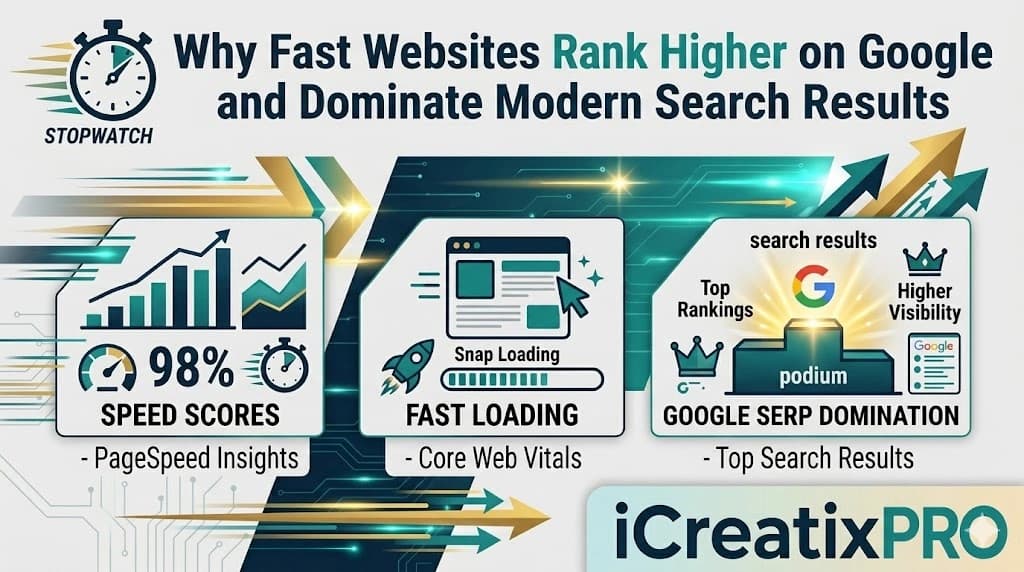
Fast websites rank higher because Google prioritizes user experience and Core Web Vitals performance. Slow-loading pages increase bounce rates, reduce engagement, and hurt SEO visibility. Website speed directly impacts Google rankings, conversions, mobile performance, and AI search visibility. Optimizing images, hosting, caching, and code can dramatically improve loading times. Mobile-first indexing makes fast mobile performance essential for modern SEO success. AI-driven search systems like Google AI Overviews favor technically optimized, high-performance websites. Faster websites build trust, keep users engaged longer, and generate more organic traffic.iCreatixPRO helps businesses in the UK, USA, and UAE improve technical SEO, website speed, and AI search visibility.
When people click on a website, they expect it to load almost instantly. Nobody enjoys staring at a blank screen while images slowly appear or buttons refuse to respond. Google understands this behavior better than anyone, which is why website speed has become one of the strongest ranking signals in modern SEO. A fast website doesn’t just improve rankings. It improves trust, user experience, conversions, and visibility across Google Search, AI Overviews, and even AI-powered platforms like ChatGPT and Perplexity. At iCreatixPRO, we’ve worked with businesses across the UK, USA, and UAE that struggled with rankings despite publishing high-quality content. In many cases, the real issue wasn’t the content itself. The problem was website performance.
Google Wants Users to Have a Better Experience
Google’s primary goal is simple: give users the best possible experience. If two websites provide similar information, Google will usually rank the faster website higher because it creates less frustration for users. Slow-loading pages increase bounce rates, reduce engagement, and send negative quality signals back to Google. This is where Core Web Vitals come into play. Core Web Vitals are performance metrics that measure: Loading speed Visual stability User interaction responsiveness If your website performs poorly in these areas, rankings can suffer — especially in competitive industries.
Speed Directly Affects User Behavior
Website speed has a massive impact on how visitors interact with your pages. A slow website often leads to: Higher bounce rates Lower session duration Fewer page views Reduced conversions Lower trust levels On the other hand, a fast website encourages users to stay longer, explore more pages, and engage with your content. Google tracks these engagement signals carefully. When users quickly leave a slow page, Google interprets it as a poor experience. Over time, this can reduce visibility in search results.
Mobile Speed Matters More Than Ever
Most internet traffic now comes from mobile devices. Google uses mobile-first indexing, meaning it primarily evaluates the mobile version of your website when determining rankings. A website that performs well on desktop but poorly on mobile can still lose rankings. In markets like the UK, USA, and UAE, mobile competition is intense. Users expect websites to load within seconds, especially on eCommerce stores, SaaS platforms, and service-based websites. Fast mobile performance improves: User retention Conversion rates Search visibility AI Overview inclusion chances
Website Speed Impacts AI Search Visibility
Modern SEO is no longer limited to traditional Google rankings. AI-powered search experiences are changing how people discover information. Platforms like Google AI Overviews, ChatGPT, and Perplexity prioritize content from websites that are technically strong and easy to process. A slow website creates crawling and rendering issues that can reduce visibility across AI search systems. At iCreatixPRO, technical SEO and AI SEO strategies are combined to help businesses improve both traditional rankings and AI-driven visibility.
Common Reasons Websites Become Slow
Many businesses unknowingly damage their own performance. Some of the most common causes include: Large uncompressed images Poor hosting services Excessive JavaScript Too many plugins Unoptimized code Lack of caching Slow server response times Even beautifully designed websites can struggle if performance optimization is ignored.
How to Improve Website Speed
Improving speed doesn’t always require rebuilding your entire website. Small technical improvements can create major SEO gains. Here are some proven strategies:
Optimize Images
Large image files are one of the biggest speed killers. Compress images without reducing quality.
Use Better Hosting
Cheap hosting often leads to slow server response times. High-performance hosting improves loading speed significantly.
Enable Caching
Caching stores website data temporarily, helping pages load faster for returning visitors.
Reduce Unnecessary Scripts
Heavy JavaScript files can delay rendering and hurt user experience.
Use a CDN
A Content Delivery Network helps deliver website files faster across different global regions. Improve Core Web Vitals Focus on metrics like Largest Contentful Paint (LCP), Interaction to Next Paint (INP), and Cumulative Layout Shift (CLS).
Fast Websites Build More Trust
People naturally trust websites that feel smooth and responsive. A slow website can make a business appear outdated or unreliable, even if the products or services are excellent. In competitive industries, users often leave and visit a competitor instead. Fast websites create: Better first impressions Higher engagement Stronger conversion rates Increased customer confidence This is why technical SEO is now a critical business investment rather than just an optional optimization.
The Future of SEO Is Performance-Driven
Search engines are becoming smarter every year. Google increasingly rewards websites that combine: Valuable content Strong technical SEO Excellent user experience Fast performance AI-friendly structure Businesses that ignore website speed will struggle to compete in future search environments. At iCreatixPRO, we help brands create performance-focused SEO strategies designed for modern search systems, AI visibility, and long-term organic growth.
FAQs
Does website speed really affect Google rankings?
Yes. Google officially uses page speed and Core Web Vitals as ranking signals, especially for mobile search results.
What is a good website loading speed?
Ideally, a website should load within 2 to 3 seconds. Faster load times usually create better engagement and SEO performance.
Why do slow websites lose traffic?
Slow websites increase bounce rates because users become frustrated and leave before interacting with the content.
What are Core Web Vitals?
Core Web Vitals are Google performance metrics that measure loading speed, responsiveness, and visual stability.
Can website speed improve conversions?
Yes. Faster websites typically generate higher conversion rates because users enjoy smoother browsing experiences.
Does mobile speed matter more than desktop speed?
Yes. Google uses mobile-first indexing, meaning mobile performance strongly impacts rankings.
How can I test my website speed?
You can use tools like Google PageSpeed Insights, GTmetrix, and Lighthouse to analyze performance.
Can AI SEO help improve website rankings?
AI SEO helps businesses optimize technical performance, content relevance, and visibility across modern AI-powered search systems.
Why choose iCreatixPRO for technical SEO?
iCreatixPRO combines AI SEO, technical optimization, and modern search strategies to help businesses grow visibility in Google and AI-driven search platforms.
How often should website speed optimization be performed?
Website performance should be monitored regularly because plugins, scripts, and updates can gradually slow down a website over time.
