Last updated: June 2026 · By iCreatixPRO
You can write the best content on the internet, but if search engines can't crawl, render, and index your pages, none of it ranks. That's the job of technical SEO: making sure your site is fast, accessible, and understandable to both search engines and the AI systems now reading the web.
This guide walks through what technical SEO is, why it still matters in 2026, and a step-by-step technical SEO audit you can run on any site.
What Is Technical SEO?
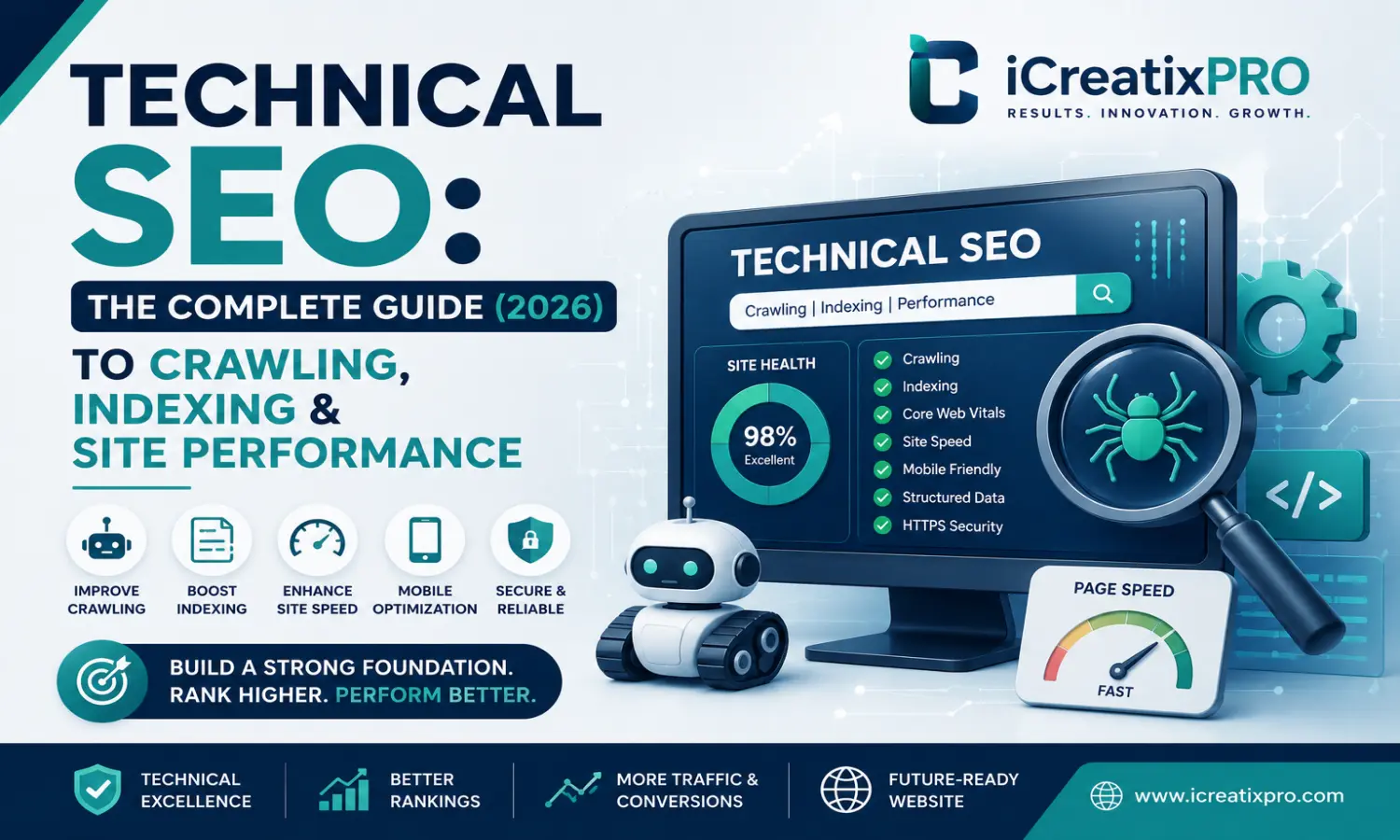
Technical SEO is the practice of optimizing your website's infrastructure so search engines can efficiently crawl, render, index, and rank it.
Where content SEO is about what you say and on-page SEO is about how you structure it, technical SEO is about the foundation underneath: server response, site architecture, crawlability, and performance. Get it wrong and everything else is built on sand.
Quick definition: Technical SEO = the behind-the-scenes work that lets search engines and AI crawlers access, understand, and trust your site.
Why Technical SEO Still Matters in 2026
A few shifts make it more important, not less:
- AI crawlers are everywhere. Google's AI systems, plus bots from ChatGPT and Perplexity, all need clean, fast access to your pages. Poor technical health means you're skipped at the source.
- Core Web Vitals are a ranking factor. Page experience signals directly influence rankings, and users bounce from slow sites.
- JavaScript-heavy sites break easily. Modern frameworks can hide content from crawlers if rendering isn't handled correctly.
The takeaway: technical SEO is the cost of entry. Without it, your content and links can't do their job.
How Search Engines Process Your Site
To fix technical issues, you need to understand the pipeline crawlers follow:
- Crawling - bots discover URLs via links and sitemaps.
- Rendering - the page is loaded, including JavaScript, to see the final content.
- Indexing - the processed page is stored and made eligible to rank.
- Ranking - the indexed page competes for queries.
Technical SEO removes friction at every one of these stages.
A Step-by-Step Technical SEO Audit
Here's a repeatable technical SEO audit you can run on any site.
1. Check Crawlability and Crawl Budget
Make sure bots can reach what matters and aren't wasting effort on what doesn't.
- Review robots.txt so you're not blocking important pages.
- Submit a clean XML sitemap and keep it current.
- Fix crawl budget waste: remove or noindex thin, duplicate, and parameter URLs.
- Audit crawl errors in Search Console.
2. Fix Indexing Issues
A crawled page isn't always an indexed page.
- Look for "Discovered/Crawled - currently not indexed" in Search Console.
- Use canonical tags to consolidate duplicate content.
- Apply noindex deliberately, not by accident.
- Confirm important pages return a 200 status, not redirects or errors.
3. Improve Core Web Vitals and Site Speed
Page experience is both a ranking signal and a conversion lever.
- LCP (Largest Contentful Paint): optimize images, server response, and critical CSS.
- INP (Interaction to Next Paint): reduce heavy JavaScript and main-thread blocking.
- CLS (Cumulative Layout Shift): set dimensions on images and reserve space for dynamic elements.
- Compress assets, enable caching, and use a CDN for site speed optimization.
4. Get Mobile-First Indexing Right
Google indexes the mobile version of your site first.
- Ensure content parity between mobile and desktop.
- Use responsive design and readable tap targets.
- Test with Google's mobile-friendly and URL inspection tools.
5. Handle JavaScript SEO
Modern frameworks need care so content isn't hidden from crawlers.
- Prefer server-side rendering (SSR) or static generation for key content.
- Avoid blocking critical resources in robots.txt.
- Verify the rendered HTML (not just the source) contains your content.
6. Add Structured Data (Schema Markup)
Help engines and AI understand your content's meaning.
- Use Article, FAQPage, Product, Breadcrumb, and Organization schema where relevant.
- Validate with the Rich Results Test.
- Keep schema accurate, mismatched markup can hurt you.
7. Secure and Stabilize the Site
- Enforce HTTPS sitewide and fix mixed-content warnings.
- Implement clean 301 redirects, avoid chains and loops.
- Maintain a logical internal linking structure so authority flows to key pages.
Technical SEO Checklist (Quick Reference)
- robots.txt reviewed, no accidental blocks
- XML sitemap submitted and current
- No critical indexing errors in Search Console
- Canonicals set correctly
- Core Web Vitals passing (LCP, INP, CLS)
- Mobile content parity confirmed
- JavaScript content renders for crawlers
- Structured data validated
- HTTPS enforced, redirects clean
- Internal linking logical and crawlable
Technical SEO Services: DIY or Hire Help?
Technical SEO spans servers, code, and analytics, so deeper fixes (rendering, crawl budget at scale, schema rollouts) often need specialist help. If that's you, point readers here: See how iCreatixPRO's technical SEO services work.
For smaller sites, the checklist above is very runnable in-house, just schedule it quarterly.
Common Technical SEO Mistakes to Avoid
- Blocking important pages in robots.txt by accident.
- Ignoring Core Web Vitals until rankings drop.
- Letting JavaScript hide content from crawlers.
- Duplicate content with no canonical strategy.
- Redirect chains that waste crawl budget and slow users.
- Set-and-forget sitemaps that go stale.
Key Takeaways
- Technical SEO is the foundation that lets content and links actually rank.
- Fix the pipeline in order: crawl → render → index → rank.
- Pass Core Web Vitals and nail mobile-first indexing.
- Use structured data so engines and AI understand your pages.
- Run a technical SEO audit on a regular schedule, not just once.
FAQ
What is technical SEO?
Technical SEO is optimizing a website's infrastructure, crawling, indexing, speed, and structure, so search engines can access, understand, and rank it.
How often should I run a technical SEO audit?
Quarterly for most sites, monthly for large or fast-changing ones, plus a full audit after any major redesign or migration.
Is technical SEO more important than content?
Neither wins alone. Technical SEO is the foundation; content and links are what rank on top of it. A weak foundation caps everything else.
Do Core Web Vitals really affect rankings?
Yes. They're part of Google's page experience signals and also directly affect user behavior, which influences performance.
Ready to Strengthen Your Technical SEO?
Start with the checklist above, fix the highest-impact issues first, and re-audit on a schedule. Need expert eyes? Talk to the iCreatixPRO team or explore our technical SEO services.
