TL;DR
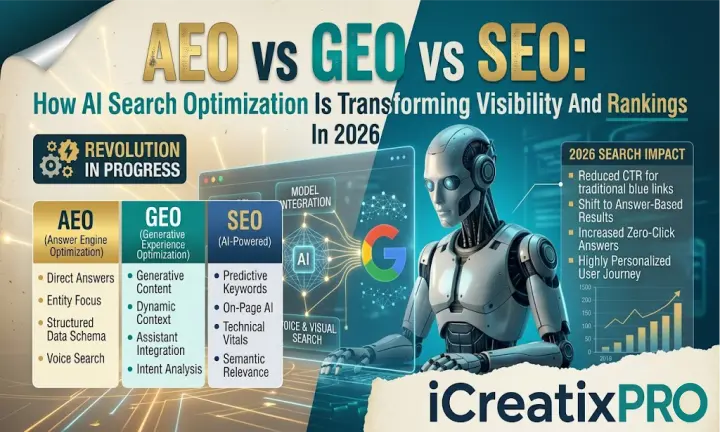
Understanding AEO vs GEO vs SEO is critical for ranking in Google AI Overviews and capturing visibility across ChatGPT, Gemini, and Perplexity in 2026. Traditional SEO builds technical foundations and organic rankings. Answer Engine Optimization (AEO) structures content for featured snippets and voice search extraction. Generative Engine Optimization (GEO) ensures your brand gets cited across AI-generated responses and conversational platforms.
The competitive advantage now belongs to businesses implementing integrated AI SEO services that combine entity-driven content architecture, semantic relevance optimization, and machine-readable structured data. While competitors focus on outdated keyword tactics, forward-thinking companies capture exponentially growing visibility across AI-powered search ecosystems.
Why this matters: 65% of searches now trigger AI-enhanced results including AI Overviews, featured snippets, or conversational answers. Search behavior shifted permanently toward zero-click experiences where users consume information directly within AI interfaces without visiting websites. Your content must satisfy both human intent and machine learning extraction systems to maintain competitive discoverability.
Strategic implementation determines whether your business appears in AI Overviews, gets cited by generative engines, or remains invisible as search behavior evolves. Companies adapting to entity-based SEO, conversational query optimization, and semantic authority building create sustainable advantages while markets remain unsaturated.
Expert insights by iCreatixPRO — Your partner in AI-first search visibility.
The fundamental question facing every business in 2026: How do you achieve visibility when AI systems generate answers instead of ranking links? Understanding AEO vs GEO vs SEO represents the difference between capturing exponentially growing AI search traffic or watching competitors dominate Google AI Overviews, ChatGPT citations, and conversational discovery platforms.
Modern search engine optimization evolved beyond traditional rankings into three interconnected visibility systems. SEO builds technical foundations through crawlable architecture, authority signals, and topical depth. AEO optimizes for answer extraction across featured snippets, voice search, and quick-answer formats. GEO ensures citation visibility when AI systems synthesize responses across ChatGPT, Google AI Overviews, Gemini, and Perplexity.
Each optimization discipline targets different visibility outcomes while reinforcing the others. Traditional SEO still drives website traffic through organic rankings. AEO captures zero-click opportunities where users find instant answers. GEO builds brand authority through AI citations reaching audiences who never click traditional search results.
The strategic imperative: Businesses combining SEO, AEO, and GEO create compounding visibility advantages across traditional search engines, answer extraction systems, and generative AI platforms simultaneously. This comprehensive guide explains exactly how these three optimization approaches work together—and why integrated implementation determines competitive positioning in AI-powered search ecosystems.
What Is The Difference Between AEO vs GEO vs SEO In AI Search Optimization
SEO (Search Engine Optimization) improves website rankings through technical infrastructure, backlink authority, and content quality signals. AEO (Answer Engine Optimization) formats content for direct answer extraction in featured snippets, voice assistants, and AI-generated quick answers. GEO (Generative Engine Optimization) optimizes for citation visibility when ChatGPT, Google AI Overviews, Gemini, and Perplexity synthesize information across multiple sources.
These three optimization approaches represent distinct but interconnected strategies for capturing modern search visibility. Traditional SEO generates website traffic through blue-link rankings in Google search results. AEO captures zero-click search volume where users consume answers without visiting websites. GEO builds brand mentions and authority signals across AI systems that increasingly mediate information discovery.
The critical distinction: Each optimization type addresses different stages of the AI-powered search journey while sharing common technical foundations. Understanding how SEO, AEO, and GEO interact determines whether businesses achieve comprehensive visibility or miss exponentially growing opportunities across conversational search platforms.
Why Traditional SEO Remains The Foundation For AI Search Rankings
Traditional SEO creates the technical infrastructure, authority signals, and content depth that AI systems evaluate when selecting sources for extraction and citation. Strong organic search performance directly predicts AI Overview visibility because both systems reward similar quality indicators.
Organic rankings influence AI discoverability because Google's algorithms trust high-ranking pages more heavily when generating AI Overviews. Pages positioned in top search results receive preferential consideration for featured snippet extraction and AI citation inclusion—creating compounding visibility advantages.
Technical SEO determines indexing and crawlability for both traditional rankings and AI extraction systems. AI platforms cannot cite content they cannot access efficiently. Core Web Vitals optimization, mobile responsiveness, structured URL architectures, and fast loading speeds directly impact whether your content enters AI training datasets and citation pools.
Domain authority and backlink profiles still matter because they communicate expertise and trustworthiness to algorithmic systems. Quality backlinks from authoritative domains signal content reliability—a critical factor when AI systems evaluate which sources deserve citation within generated responses.
Topical depth and content comprehensiveness demonstrate genuine expertise versus opportunistic keyword targeting. AI systems detect comprehensive topic coverage through semantic analysis, rewarding thorough treatment of subjects with preferential visibility across answer extraction and generative response systems.
Why SEO is evolving rather than disappearing: Modern search algorithms became more sophisticated, not simpler. The same signals that convinced traditional search engines to rank content highly—technical excellence, authoritative citations, comprehensive coverage, user engagement—now influence AI system decisions about which sources to extract from and cite.
How Answer Engine Optimization (AEO) Captures Featured Snippet Rankings
AEO emerged when search engines began extracting direct answers from content instead of only ranking web pages. Featured snippets, knowledge panels, and voice search responses fundamentally changed information discovery by providing answers within search interfaces without requiring website visits.
Featured snippets dominate above-the-fold visibility by appearing prominently above traditional organic results. Content optimized for snippet extraction captures position zero visibility while simultaneously improving traditional rankings—creating dual optimization benefits from single content investments.
Conversational search queries increased exponentially with voice assistants, mobile search, and AI chat interfaces. Users ask complete natural-language questions instead of typing keyword phrases—requiring content structured around comprehensive question coverage rather than isolated keyword optimization.
Intent-first content formatting addresses user questions directly rather than forcing readers to extract answers from long paragraphs. Modern algorithms identify content that immediately satisfies search intent, rewarding clear question-answer structures with improved extraction frequency and visibility.
Voice search optimization principles emphasize natural language patterns and conversational readability. Content written how people actually speak improves extraction likelihood across voice assistants, smart speakers, and AI chat platforms—capturing rapidly growing voice query volume.
Why concise answer formatting improves visibility: AI extraction systems prefer scannable content with clear headings, short paragraphs, and definitive statements. Content organized as definition blocks, numbered lists, or direct question-answer pairs gets extracted significantly more frequently than dense, unstructured text blocks.
What Generative Engine Optimization (GEO) Means For AI Citation Visibility
GEO represents the newest optimization frontier—ensuring your content gets cited when ChatGPT, Google AI Overviews, Gemini, Perplexity, and similar platforms generate synthesized answers by combining information from multiple authoritative sources.
AI-generated citations create brand exposure without requiring traditional website clicks. When generative engines reference your content within synthesized responses, they build brand recognition and authority signals across thousands of conversations—creating ambient visibility that compounds over time.
How GEO influences conversational AI platforms: Generative engines evaluate semantic authority, entity relationships, topical comprehensiveness, and contextual relevance when selecting citation sources. They preferentially reference content demonstrating deep expertise through interconnected topical coverage and consistent publishing within focused domains.
Citation mentions versus traditional rankings represent fundamentally different visibility metrics with distinct business value. A #1 ranking generates direct traffic. Citations across hundreds of AI-generated responses build widespread brand awareness and authority positioning without direct clicks—influencing future search behavior and brand consideration.
Why modern visibility now requires GEO optimization: As zero-click search behavior accelerates and AI-assisted research becomes standard, citation frequency across generative platforms determines brand perception and market authority. Early adoption of GEO optimization services creates compounding advantages before competitive markets saturate.
Why AI Search Engines Are Reshaping SEO Faster Than Most Businesses Expected
AI search engines reduced traditional click-through rates by extracting answers directly within search interfaces, fundamentally changing how users discover information and make decisions. This shift accelerated dramatically in 2024-2025 when Google AI Overviews, ChatGPT Search, and similar platforms achieved mainstream adoption across millions of daily searches.
The transformation impacts every aspect of digital marketing strategy. Businesses optimizing only for blue-link rankings increasingly lose visibility as users consume AI-generated summaries instead of clicking through to websites. Meanwhile, early adopters of AI search optimization capture growing attention within conversational interfaces.
How Google AI Overviews And ChatGPT Search Changed Discovery
Google AI Overviews appear for approximately 15-20% of all searches in 2026, providing synthesized answers above traditional organic results. ChatGPT Search handles millions of daily queries entirely through conversational AI without displaying blue links at all. These platforms fundamentally altered user expectations and search behavior patterns.
AI-generated SERPs and reduced click behavior means users increasingly trust AI-synthesized answers over manually browsing multiple websites. Research that previously required visiting 5-10 pages now completes within a single AI-generated response—dramatically reducing traditional website traffic from informational queries.
Conversational search experiences replacing traditional browsing changes the entire discovery journey. Users engage in back-and-forth dialogues with AI systems, refining questions and receiving progressively detailed answers—all without leaving the search or chat interface.
Why users increasingly trust summarized answers: AI systems provide instant gratification by synthesizing information from multiple authoritative sources simultaneously. The cognitive ease of receiving a comprehensive, well-organized answer outweighs the effort required to research independently across different websites.
The rise of AI-assisted decision-making journeys extends beyond simple fact-finding into complex evaluations, comparisons, and strategic recommendations. AI search engines now guide purchase decisions, career choices, technical troubleshooting, and business strategy—creating new conversion pathways entirely within conversational interfaces.
Why search behavior is becoming conversational
Users naturally ask complete questions when interacting with AI systems instead of typing truncated keyword phrases. This shift toward natural language queries requires content structured around comprehensive topic coverage rather than isolated keyword targeting.
How AI search changes user expectations
Modern search users expect immediate, synthesized answers rather than lists of potential resources. They increasingly perceive traditional search results as outdated when AI alternatives provide instant, contextual responses tailored to specific questions.
Search engines vs answer engines vs generative engines
Traditional search engines index and rank web pages. Answer engines extract direct responses from content. Generative engines synthesize new answers by combining information across multiple sources. Understanding these distinctions clarifies why modern optimization requires different approaches for each visibility channel.
Why AI visibility matters more than rankings alone
A #1 ranking for a high-volume keyword generates traffic. Citations across hundreds of AI-generated answers build brand authority and trust at scale. As AI search adoption grows, visibility within conversational platforms increasingly determines market position and brand perception.
How Traditional SEO Still Supports AI Search Performance
Traditional SEO creates the foundational trust, authority, and technical infrastructure that AI systems evaluate when selecting sources to extract information from and cite. Strong organic search performance directly correlates with citation frequency across AI-generated answers because both systems reward similar quality signals.
Google's algorithms spend decades refining methods to identify authoritative, trustworthy content. AI search engines leverage these same signals—domain authority, backlink profiles, content depth, user engagement—when determining which sources deserve citation within generated responses.
Which SEO Ranking Factors Still Matter In 2026
The core principles that built successful SEO strategies over the past decade remain relevant because they communicate expertise, trustworthiness, and value to both human users and machine learning systems. AI doesn't eliminate ranking factors—it reinforces the importance of genuine quality signals over manipulative tactics.
Technical SEO and structured architecture ensure content remains accessible, fast-loading, mobile-optimized, and properly indexed. AI systems cannot cite content they cannot crawl efficiently. Clean site architecture, logical information hierarchy, and technical performance directly impact AI discoverability.
Topical authority and link signals demonstrate expertise and trustworthiness across specific domains. Websites with comprehensive coverage of related topics, supported by quality backlinks from recognized authorities, earn preferential treatment in both organic rankings and AI citation selection.
User experience and engagement metrics reveal content quality beyond keyword optimization. Metrics like time-on-page, scroll depth, return visitor rates, and low bounce rates signal valuable content to algorithms—informing both ranking decisions and AI system source selection.
Content indexing and crawl efficiency determines how quickly new information becomes available across search and AI platforms. Properly implemented XML sitemaps, strategic internal linking, and optimized crawl budgets ensure your latest content enters AI training data and citation pools promptly.
Why SEO is not dead in 2026
Traditional SEO evolved rather than disappeared. The same strategies that generate organic traffic now also improve AI citation likelihood. Technical excellence, authoritative linking, and comprehensive content remain valuable because AI systems inherited quality evaluation frameworks from traditional search algorithms.
Traditional rankings still feed AI systems
Higher organic rankings increase the probability AI platforms select your content as source material. Top-ranking pages receive more algorithmic trust, making them preferred citation sources when generative engines synthesize answers across multiple domains.
Why technical SEO supports GEO and AEO
Clean technical foundations enable AI systems to efficiently access, parse, and extract information from your content. Technical SEO removes barriers that prevent AI citation while simultaneously improving traditional search visibility—creating compounding benefits across all optimization channels.
The role of structured websites in AI discoverability
Well-organized site architecture helps both human visitors and AI systems quickly identify authoritative information on specific topics. Logical content hierarchies, clear navigation paths, and semantic relationships between pages improve AI's ability to understand your expertise and cite your content appropriately.
How AEO Works Inside Conversational And Answer-Based Search Experiences
AEO structures content to maximize extraction likelihood when AI systems or search engines need direct answers to specific user questions. Unlike traditional SEO that optimizes for ranking positions, AEO formats information for easy identification, extraction, and presentation as standalone answers within search interfaces or voice responses.
Answer engines prioritize content that directly addresses user intent without requiring additional context or navigation. This means restructuring how information gets presented—favoring concise definitions, clear explanations, and scannable formatting over traditional long-form article structures.
How Answer Engines Extract Trusted Information
Answer extraction systems analyze content structure, semantic clarity, and authority signals to identify the most relevant response to each query. These systems don't simply keyword-match—they evaluate contextual appropriateness, information completeness, and source trustworthiness simultaneously.
Passage-based ranking systems evaluate individual paragraphs or sections rather than entire pages. A single well-crafted paragraph answering a specific question can outperform a comprehensive article lacking clear, extractable answers—fundamentally changing content structuring priorities.
FAQ extraction and direct-answer formatting increases answer visibility because AI systems easily identify question-answer patterns. Content structured as "What is X?" followed by a clear, concise definition gets extracted far more frequently than information buried within dense paragraphs.
Voice search optimization principles emphasize natural language patterns and conversational phrasing. Content written how people actually speak improves extraction likelihood for voice queries, smart assistant responses, and conversational AI platforms.
AI-generated summaries and contextual responses often pull information from multiple paragraphs or sections to construct complete answers. Clear topic segmentation and semantic relationships between sections help AI systems understand how different pieces of information relate and combine meaningfully.
How To Structure Content For Better AEO Visibility
AEO-optimized content balances comprehensive information depth with extractable answer units. The goal is creating content AI systems can confidently cite while still providing value to human readers who want complete explanations beyond simple definitions.
Building answer-ready paragraphs means starting sections with direct, standalone statements that make sense without surrounding context. The first 2-3 sentences should provide complete answers that AI systems can extract as featured snippets or conversational responses.
Conversational formatting strategies include writing in natural language patterns, using second-person perspective, and structuring content around common question phrasings. Content that mirrors how users actually ask questions gets prioritized by answer extraction algorithms.
Schema markup for answer extraction provides explicit signals about content type and structure. FAQ schema, HowTo schema, and Article schema help AI systems understand information organization and identify appropriate content for different query types.
Intent-focused content segmentation organizes information by user goals rather than arbitrary section lengths. Each subsection should completely address one specific aspect of the broader topic, making it easy for AI systems to extract relevant portions for particular queries.
Why concise answers outperform long explanations
AI systems prefer definitive, scannable responses over academic-length explanations. Concise answers reduce extraction complexity while improving user experience—making them ideal content units for both featured snippets and AI-generated responses.
How AI systems identify trustworthy information
Trust evaluation combines domain authority, content freshness, citation presence, semantic consistency, and alignment with established knowledge graphs. Content demonstrating expertise through comprehensive coverage and proper attribution earns higher trust scores across AI systems.
Why conversational readability improves visibility
Natural language processing algorithms evaluate content readability and conversational flow. Content written in accessible, engaging language that mirrors human speech patterns gets prioritized over overly technical or keyword-stuffed alternatives.
Creating content optimized for featured snippets
Featured snippet optimization requires structuring content in formats AI can easily extract: numbered lists for processes, bulleted lists for options, tables for comparisons, and short paragraphs (40-60 words) for definitions. These formats translate directly into AEO success.
How GEO Improves Visibility Across AI Search Platforms
GEO optimizes content to become a citation source that AI systems reference when generating answers across ChatGPT, Google AI Overviews, Gemini, Perplexity, Bing Copilot, and similar platforms. Rather than targeting traditional rankings, GEO focuses on semantic authority, entity relationships, and contextual trust that increase selection probability when AI engines synthesize information.
Generative search engines evaluate content differently than traditional search algorithms. They prioritize sources demonstrating deep topical expertise, clear entity associations, citation-ready formatting, and semantic consistency across comprehensive content ecosystems.
Why GEO Focuses On Citations Instead Of Only Rankings
Citations within AI-generated responses create brand exposure at scale without requiring click-throughs. As users increasingly consume information within AI interfaces rather than visiting websites, citation visibility becomes the primary metric for discoverability and authority building.
AI-generated mentions and source attribution appear prominently within conversational responses, building brand recognition across thousands of interactions. Each citation reinforces expertise and trustworthiness—creating compounding authority advantages over time.
Citation visibility in AI Overviews determines which brands users associate with authoritative information on specific topics. Consistent citation presence positions your business as the trusted source within your domain, even when users never visit your website directly.
Contextual authority signals include comprehensive topic coverage, semantic relationships between concepts, consistent entity references, and alignment with knowledge graph structures. AI systems reward sources demonstrating genuine expertise over isolated keyword pages.
AI-powered recommendation systems increasingly influence purchase decisions, product selections, and strategic choices. Businesses achieving citation visibility within AI recommendations capture conversion opportunities entirely within conversational interfaces—creating new pathways beyond traditional website funnels.
Why Entity-Based SEO Is Critical For GEO Success
Entity-based optimization helps AI systems understand what your brand represents and which topics you authoritatively cover. Strong entity associations improve citation selection probability because AI platforms preferentially reference sources with clear, consistent topical positioning.
Entity salience and semantic relationships measure how strongly your content associates with specific concepts, industries, or expertise areas. Building dense entity networks through comprehensive coverage establishes clear topical authority AI systems recognize and trust.
Brand-topic associations and contextual trust develop through consistent publishing, comprehensive coverage, and strong internal linking across related content. AI systems map these relationships, using them to determine appropriate sources for different query contexts.
Knowledge Graph optimization strategies involve aligning content with structured data vocabularies, building consistent entity references, and creating semantic relationships that match how AI systems categorize information. Proper entity markup helps AI platforms understand your expertise areas.
Semantic authority development requires depth over breadth. Comprehensive coverage of core topics outperforms surface-level content across many unrelated areas. AI systems reward focused expertise demonstrated through thorough, interconnected content ecosystems.
Why AI systems prefer entity-rich content
Entity-rich content provides clear semantic signals about expertise areas and topical coverage. AI systems easily map entity relationships, making it straightforward to identify authoritative sources for specific queries within their knowledge domains.
Building citation-ready content ecosystems
Citation-ready content uses clear attributions, quotable insights, specific data points, and definitive statements that AI systems can confidently reference. Each piece of content should contain multiple citation-worthy elements formatted for easy extraction.
How topical authority increases AI mentions
Comprehensive topical coverage signals genuine expertise versus opportunistic keyword targeting. AI systems detect depth through interconnected content covering subtopics, related concepts, use cases, and practical applications within focused domains.
Why semantic relevance matters more than keyword density
Modern AI systems evaluate contextual meaning rather than keyword presence. Semantic relevance through natural language, related concept coverage, and logical information flow outperforms mechanical keyword repetition across all visibility channels.
GEO vs SEO — The Real Difference Between Rankings And AI Visibility
GEO targets citation visibility across AI-generated responses while SEO optimizes for traditional organic rankings—fundamentally different outcomes requiring distinct but complementary strategies. Understanding this distinction clarifies why businesses need integrated approaches rather than choosing between traditional or AI-focused optimization.
SEO generates website traffic through search engine result pages. GEO builds brand authority through AI citations and mentions. Both create value, but they operate through different mechanisms, require different optimization approaches, and generate different business outcomes.
How GEO Expands Beyond Traditional Search Engine Optimization
GEO addresses the reality that visibility now extends beyond Google's first page into conversational interfaces, AI assistants, and generative search platforms. Modern users discover information across multiple AI-powered channels—each requiring specific optimization approaches beyond traditional SEO techniques.
Blue links vs AI-generated recommendations represent fundamentally different user experiences. Blue links require users to evaluate options and click through to websites. AI-generated recommendations provide synthesized guidance directly within conversational interfaces—often including source citations without requiring clicks.
Rankings compared to AI mentions and citations measure different aspects of visibility. Rankings determine position within search results lists. Citations measure how frequently your content gets referenced across AI-generated responses—potentially reaching larger audiences through ambient brand exposure.
Search clicks vs conversational discoverability reflects changing user behavior patterns. Traditional search optimization maximizes clicks to your website. Conversational optimization maximizes brand mentions and authority signals across AI interactions—building recognition even without direct traffic.
Multi-platform visibility across AI ecosystems extends reach beyond Google into ChatGPT, Gemini, Perplexity, Claude, and future AI platforms. GEO strategies position content for citation across this expanding ecosystem rather than optimizing solely for one search engine.
GEO vs SEO ranking philosophy
SEO philosophy centers on earning the highest position for target keywords within search results. GEO philosophy prioritizes becoming the most-cited source for topics within your expertise domain—regardless of specific keyword rankings.
Why AI visibility creates brand exposure beyond clicks
Citations within AI responses build passive brand awareness across thousands of conversations without requiring active engagement. Users repeatedly see your brand referenced as an authority source, creating familiarity and trust that influences future decisions.
The rise of zero-click search behavior
Zero-click searches where users find answers without visiting websites now represent significant portions of search volume. As AI-generated answers become more comprehensive, optimizing for citation visibility captures value from queries that generate no traditional traffic.
Why modern search optimization now requires both strategies
Traditional SEO drives direct website traffic and conversions. GEO builds long-term brand authority and ambient visibility. Together, they create comprehensive discoverability across both traditional and AI-powered search experiences—maximizing total visibility and market influence.
AEO vs SEO — Why Search Optimization Is Becoming Question-Driven
AEO prioritizes answering specific user questions concisely while SEO traditionally optimized for keyword rankings regardless of query format. This distinction matters because conversational search patterns increasingly dominate user behavior—requiring content structured around comprehensive question coverage rather than keyword density.
Modern search algorithms understand user intent and conversational context. They reward content that directly addresses the questions users actually ask over pages that mechanically target keyword variations without providing clear, useful answers.
Why AEO Prioritizes User Questions Over Keyword Stuffing
Question-driven optimization aligns content with how users naturally seek information. Instead of targeting "best running shoes" generically, AEO addresses specific questions: "What running shoes work best for flat feet?" or "How often should I replace running shoes?"—each requiring different, targeted answers.
Conversational intent optimization structures content around the actual questions users ask rather than abstract keyword concepts. This approach matches evolving search behavior where users increasingly type or speak complete questions expecting direct answers.
Question-based search behavior grew dramatically with voice search, mobile queries, and AI assistants. Users ask conversational questions rather than typing keyword phrases—requiring content that addresses natural language patterns and provides extractable answers.
Voice search and natural-language queries emphasize long-tail question phrases over short keywords. Content optimized for "What causes X?" or "How do I fix Y?" captures growing voice search volume while simultaneously improving traditional rankings through comprehensive intent coverage.
Direct-answer content frameworks organize information to provide immediate value at the beginning of each section. Starting with clear answers followed by supporting details improves both user experience and extraction likelihood for featured snippets and AI responses.
Why users expect instant answers
Modern search users experience conditioned by AI assistants, featured snippets, and instant answer formats expect immediate information gratification. Content requiring extensive reading before reaching useful information increasingly gets bypassed for more accessible alternatives.
How AI search reduces search friction
AI-generated answers eliminate the need to browse multiple websites, compare information quality, and synthesize findings manually. Users receive comprehensive, pre-synthesized responses instantly—dramatically reducing research friction and changing content consumption patterns.
Why FAQ optimization improves discoverability
FAQ formats explicitly match question-based search patterns while providing clear extraction units for AI systems. Well-structured FAQ sections improve visibility across voice search, featured snippets, and AI-generated responses simultaneously.
Answer-first SEO strategies for 2026
Answer-first optimization places the most valuable information prominently at section beginnings, uses clear question-based headings, provides concise definitions before detailed explanations, and structures content for easy scanning and extraction across both human and AI audiences.
How AI SEO Combines SEO, AEO, And GEO Into One Unified Strategy
AI SEO integrates traditional optimization, answer extraction, and citation visibility into comprehensive strategies addressing all modern discoverability channels. Rather than treating SEO, AEO, and GEO as separate initiatives, AI SEO recognizes they work synergistically—each reinforcing the others to maximize total visibility.
Effective AI SEO implementation requires understanding how technical foundations, answer formatting, and semantic authority compound to create advantages across traditional search, featured snippets, and AI-generated responses simultaneously.
What AI SEO Looks Like In Modern Search Optimization
AI SEO represents evolved optimization recognizing that visibility now spans multiple platforms and formats. Success requires satisfying traditional ranking algorithms, answer extraction systems, and generative AI citation selection simultaneously through integrated technical and content strategies.
AI-first discoverability frameworks design content ecosystems specifically for machine readability while maintaining human engagement. This dual optimization ensures content performs well across algorithmic evaluation, AI extraction systems, and actual user experiences.
Semantic SEO and contextual relevance replace outdated keyword-centric approaches with comprehensive topical coverage. AI systems reward semantic consistency, entity relationships, and contextual depth over mechanical keyword repetition—requiring more sophisticated content strategies.
AI Overview optimization strategies focus on earning visibility within Google's AI-generated answer boxes appearing above traditional results. This requires combining technical SEO, structured data implementation, and clear answer formatting to maximize selection probability.
Search experience engineering across platforms optimizes visibility across Google, ChatGPT, Gemini, Perplexity, and emerging AI search tools simultaneously. Businesses can access advanced AI SEO tools to monitor performance across these diverse platforms and identify optimization opportunities.
Why Businesses Need AI SEO Strategies To Stay Competitive
Competitive advantages increasingly favor early adopters of integrated AI search strategies. As more users rely on AI-generated answers and conversational search experiences, businesses optimizing solely for traditional rankings lose market share to competitors capturing AI visibility channels.
AI-assisted buyer journeys now influence purchase decisions across most categories. Users ask AI systems for recommendations, comparisons, and evaluations—making citation visibility within these conversations critical for maintaining market presence and influencing purchase consideration.
Conversational commerce growth enables transactions entirely within AI interfaces. Users research products, compare options, receive recommendations, and make purchase decisions through conversational AI—creating new conversion pathways that bypass traditional website funnels.
Search visibility across multiple AI systems compounds brand exposure beyond what traditional SEO alone achieves. Citations across ChatGPT, Google AI Overviews, Gemini, and Perplexity create ambient authority building that reinforces brand positioning across diverse user contexts.
Future-proofing digital discoverability requires adapting to accelerating AI search adoption before markets saturate. Early investment in AI search optimization creates compounding visibility advantages as these platforms gain user share from traditional search engines.
Combining GEO, AEO, and SEO effectively
Effective integration starts with strong technical SEO foundations, adds answer-ready content formatting for AEO, and builds semantic authority for GEO citation visibility. Each layer reinforces the others—creating synergistic effects exceeding isolated optimization approaches.
Why AI SEO is becoming essential for brands
Brands invisible in AI-generated responses lose mindshare as users increasingly trust AI recommendations over traditional search results. Citation visibility becomes the new ranking—determining which brands users consider authoritative within specific domains.
Building sustainable visibility in AI-powered search
Sustainable AI visibility requires genuine expertise, comprehensive content, semantic consistency, and technical excellence. These factors create durable competitive advantages resistant to algorithm changes because they demonstrate authentic value to both human users and AI evaluation systems.
AI search optimization trends shaping 2026
Key trends include increasing AI search adoption, growing zero-click behavior, rising voice search volume, expanding conversational commerce, and platform proliferation beyond Google. Each trend reinforces the importance of integrated AI search strategies addressing visibility across diverse channels.
How To Optimize Content For AI Overviews, GEO, And AEO Simultaneously
Content optimized for all three visibility systems uses clear semantic structure, comprehensive topical coverage, extractable answer units, and strategic structured data implementation. Rather than creating separate content for each optimization type, effective strategies design content satisfying multiple systems through thoughtful architecture and formatting.
Successful multi-system optimization requires understanding how different AI platforms evaluate content while recognizing the common factors they all reward: semantic clarity, topical authority, technical accessibility, and genuine expertise demonstrated through comprehensive coverage.
Which Content Structures Perform Best In AI Search
Content structure dramatically impacts AI visibility across all platforms. Well-organized information hierarchies help both users and AI systems quickly locate relevant information, understand topical relationships, and extract appropriate content for specific query contexts.
Clear heading hierarchy and semantic organization creates logical information architecture AI systems easily parse. H2 and H3 headings should reflect natural question patterns and topical segmentation, making content structure immediately apparent to both human readers and machine learning algorithms.
AI-readable formatting and contextual chunking segments information into logical units that stand alone contextually while contributing to broader topic coverage. Each section should completely address one specific aspect, enabling AI systems to extract relevant portions for different queries.
Citation-ready paragraphs and quotable insights include definitive statements, specific data points, unique perspectives, and clear attributions that AI systems can confidently reference. Every major section should contain 2-3 citation-worthy statements formatted for easy extraction.
Structured answer blocks for extraction systems use consistent formatting patterns AI algorithms recognize: definitions at section starts, numbered lists for processes, comparison tables for options, and FAQ formats for common questions—all optimized for featured snippet and AI response inclusion.
How Structured Data Improves AI Search Visibility
Structured data provides explicit signals about content meaning, organization, and purpose that AI systems use for evaluation and citation selection. Proper schema implementation dramatically improves discoverability across traditional search, answer extraction, and generative AI platforms.
FAQ schema implementation explicitly marks question-answer pairs, making them immediately identifiable to AI extraction systems. This increases featured snippet eligibility while helping generative engines locate appropriate answers for user queries.
Article and Organization schema benefits provide contextual information about content type, authorship, publication date, and organizational authority. These signals improve trust evaluation and help AI systems understand appropriate contexts for content citation.
Speakable schema opportunities mark content sections suitable for voice search responses and audio answers. This optimization becomes increasingly important as voice-activated AI assistants gain adoption across smart speakers, mobile devices, and automotive systems.
Machine-readable metadata enhancements include structured descriptions, clear entity references, topic classifications, and semantic relationships that help AI systems categorize content and understand expertise areas—improving citation selection across relevant queries.
Why machine readability matters more than ever
AI systems make citation decisions in milliseconds based on how easily they can parse, understand, and extract information. Machine-readable content structures remove ambiguity, enabling confident extraction and citation across diverse query contexts.
Schema markup for conversational search visibility
Schema implementation creates explicit semantic signals that conversational AI systems use for answer generation. Properly marked content gets preferential treatment because AI engines confidently understand content meaning, context, and appropriate usage scenarios.
Writing content AI systems can quote directly
Citation-worthy content uses definitive statements, avoids hedging language, includes specific supporting details, and formats information clearly. Each major point should be expressible as a standalone statement AI systems can extract and attribute confidently.
Building AI-friendly content ecosystems
AI-friendly ecosystems feature comprehensive topical coverage, clear entity relationships, consistent internal linking, semantic consistency across related content, and progressive information depth—all factors that help AI systems understand your authoritative expertise areas.
Why Semantic SEO And Topical Authority Matter More Than Ever
Semantic SEO focuses on comprehensive topic coverage and conceptual relationships rather than mechanical keyword targeting—exactly how modern AI systems evaluate content quality and citation worthiness. As search algorithms and generative engines become more sophisticated, they increasingly reward genuine expertise demonstrated through depth and consistency over keyword optimization tactics.
Topical authority emerges from building comprehensive content ecosystems around core expertise areas. AI systems detect these patterns, using them to determine which sources deserve citation priority for queries within those domains.
How AI Search Engines Understand Context And Relationships
Modern AI systems analyze content through natural language processing that evaluates semantic meaning, entity relationships, contextual relevance, and topical consistency. They understand how concepts relate rather than simply matching keywords—fundamentally changing effective optimization strategies.
Semantic topic clustering organizes related content into interconnected ecosystems demonstrating comprehensive expertise. AI systems map these relationships, using cluster density and completeness as authority signals when selecting citation sources.
NLP-based ranking systems evaluate natural language quality, readability, semantic consistency, and contextual appropriateness. They reward content written for human comprehension using natural phrasing over keyword-optimized text that sacrifices readability.
Contextual relevance and entity associations determine how strongly your content relates to specific topics, industries, or expertise areas. Strong entity signals help AI systems confidently identify appropriate citation sources for different query contexts.
Topical depth as a trust signal demonstrates genuine expertise versus superficial coverage. Comprehensive treatment of subtopics, use cases, related concepts, and practical applications creates stronger authority signals than isolated keyword pages lacking contextual depth.
Why Topical Authority Improves AI Mentions And Citations
AI systems preferentially cite sources demonstrating clear expertise within specific domains. Building topical authority through comprehensive, interconnected content increases citation probability across all queries related to your core expertise areas—creating compounding visibility advantages.
Internal linking and content ecosystems create semantic relationships AI systems recognize as expertise signals. Strategic linking between related topics demonstrates content interconnectedness and comprehensive coverage—both factors improving AI citation likelihood.
Authority reinforcement across related topics builds through consistent publishing, progressive depth development, and comprehensive subtopic coverage. Each new piece of content reinforces existing topical authority while expanding the semantic territory you authoritatively cover.
Building trust through semantic consistency involves maintaining consistent terminology, entity references, conceptual frameworks, and expertise positioning across all related content. Semantic consistency signals genuine expertise versus opportunistic keyword targeting.
Content depth vs isolated keyword pages fundamentally differs in AI evaluation. Single pages targeting isolated keywords lack contextual authority. Comprehensive ecosystems covering topics thoroughly from multiple angles demonstrate expertise AI systems reward with preferential citation treatment.
Semantic SEO vs outdated keyword-only optimization
Semantic SEO addresses topics comprehensively using natural language and covering related concepts. Keyword-only optimization mechanically targets phrases without regard for contextual meaning or comprehensive coverage—an approach increasingly ineffective as AI systems become more sophisticated.
How AI understands content relationships
AI systems map semantic relationships through entity detection, concept clustering, topical association analysis, and contextual relevance evaluation. They understand how content pieces relate and whether collections demonstrate genuine expertise versus fragmented coverage.
Why topical depth increases AI visibility
Deep topical coverage signals authoritative expertise that AI systems trust for citations. Comprehensive treatment of subjects from multiple angles, addressing common questions, covering use cases, and explaining nuances demonstrates the expertise AI platforms seek.
Building authority around core entities
Entity-focused authority building involves consistently publishing around specific topics, maintaining clear entity associations, building knowledge graph presence, and developing semantic density within core expertise domains—all factors improving AI citation selection.
Why Zero-Click Search And AI Answers Are Changing Traffic Patterns
Zero-click searches where users find complete answers without visiting websites now represent 25-30% of all Google searches—a percentage growing as AI-generated answers become more comprehensive. This fundamental shift requires rethinking success metrics beyond traditional click-through rates and website traffic.
As AI systems provide increasingly complete answers directly within search interfaces, businesses must adapt strategies to capture value from visibility and authority building even when users never click through to websites.
How AI Search Is Reducing Traditional Organic Clicks
AI-generated summaries provide users with comprehensive information directly within search results, featured snippets, and conversational platforms—eliminating the need to visit multiple websites for research. This trend accelerates as AI answers become more detailed and trustworthy.
AI-generated summaries replacing clicks means high-quality information that previously drove traffic now gets extracted and presented within search interfaces. While this reduces direct traffic, it creates citation opportunities that build brand recognition and authority.
Faster research behavior and instant answers changes user expectations around information access. Users increasingly expect immediate, synthesized answers rather than conducting manual research across multiple sources—preferring AI-generated summaries over traditional browsing.
Search experience evolution across platforms moves toward conversational interfaces where users ask follow-up questions, request clarifications, and explore topics through dialogue rather than iterating keyword searches across multiple browser tabs.
Conversational recommendation systems increasingly influence decisions previously requiring website visits. Users ask AI systems for product recommendations, service comparisons, and strategic advice—receiving synthesized guidance without needing traditional research journeys.
Why SEO traffic patterns are shifting
Traditional traffic patterns concentrated around top keyword rankings. Modern patterns distribute across featured snippets, AI citations, brand searches, and long-tail conversational queries—requiring more sophisticated tracking and attribution models.
How AI search changes customer journeys
Customer journeys increasingly include AI-assisted research phases where users gather information, evaluate options, and develop preferences through conversational interfaces before visiting websites—making early-stage visibility within AI systems critical for consideration.
The future of conversational search experiences
Future search experiences will likely become predominantly conversational, with AI assistants handling research, providing recommendations, and facilitating transactions—making citation visibility and conversational optimization increasingly important for business discoverability.
Why businesses must adapt beyond rankings
Businesses optimizing solely for traditional rankings miss growing visibility opportunities across AI-generated answers, conversational platforms, and zero-click experiences. Adaptation requires valuing brand mentions, authority signals, and assisted conversions alongside direct traffic metrics.
How To Measure GEO, AEO, And AI Search Visibility In 2026
Traditional ranking metrics alone no longer capture total search visibility—businesses need comprehensive measurement frameworks tracking AI Overview presence, citation frequency, conversational mentions, and assisted conversions alongside traditional positions. Effective measurement requires new tools and methodologies addressing visibility across fragmented AI search ecosystems.
Understanding performance across multiple AI platforms requires tracking metrics beyond traditional Google rankings: feature snippet presence, AI Overview visibility, brand mention frequency, citation tracking, and conversational search exposure.
Which AI SEO Metrics Matter Beyond Traditional Rankings
AI search visibility measurement extends beyond traditional position tracking to include extraction frequency, citation presence, and brand mention patterns across diverse platforms. These metrics capture the full spectrum of modern discoverability.
AI Overview impressions and visibility trends measure how frequently your content appears in Google's AI-generated answer boxes. Increasing AI Overview presence indicates improving relevance and authority for queries within your topic domains.
Citation frequency and brand mention tracking monitors how often AI systems like ChatGPT, Gemini, and Perplexity reference your brand or content when generating answers. Higher citation frequency indicates growing authority and trust within AI recommendation systems.
Conversational search exposure metrics estimate visibility across conversational platforms where traditional analytics don't apply. This includes tracking brand searches, monitoring social mentions of AI recommendations, and analyzing referral patterns from AI platforms.
Assisted conversions from AI systems measures transactions influenced by AI-generated recommendations even when users don't directly click from AI platforms to your website. Attribution modeling must account for AI-assisted customer journeys.
How Businesses Can Monitor AI Search Performance
Monitoring AI search performance requires combining traditional SEO tools with new AI visibility tracking methodologies. Comprehensive monitoring addresses both traditional organic results and emerging AI-powered visibility channels.
Search Console analysis for AI visibility identifies which queries trigger featured snippets, AI Overviews, and other enhanced results featuring your content. Tracking these patterns reveals improving or declining AI extraction frequency.
Entity tracking and topical authority measurement monitors your brand's Knowledge Graph presence, entity associations, and topical relevance scores. Strengthening entity signals correlates with increased citation likelihood across AI platforms.
AI Overview monitoring workflows involve regularly querying target topics across different AI platforms to track citation presence, answer quality, and competitive positioning. Manual monitoring supplements automated tracking for comprehensive visibility assessment.
Brand presence across conversational platforms requires monitoring mentions, citations, and recommendations across ChatGPT, Gemini, Perplexity, Claude, and other AI systems. Understanding cross-platform visibility patterns informs optimization priorities.
Rankings vs mentions vs citations
Rankings determine position in traditional search results. Mentions track brand awareness across AI responses. Citations measure authoritative references with attribution. Each metric captures different visibility aspects requiring distinct optimization strategies.
Measuring conversational search exposure
Conversational exposure measurement combines brand search volume analysis, social mention monitoring, referral traffic patterns, and manual AI query testing. Together, these methods estimate visibility across platforms lacking traditional analytics.
Building long-term AI visibility strategies
Long-term AI visibility grows through consistent expertise demonstration, comprehensive content development, semantic consistency maintenance, and technical excellence—all creating durable authority signals that compound over time.
Why AI search analytics require a new mindset
Traditional analytics focused on rankings, traffic, and conversions. AI search analytics must also value authority building, citation presence, and assisted conversions—recognizing that visibility creates business value beyond direct click-through traffic.
Businesses ready to build comprehensive AI search visibility strategies can contact iCreatixPRO for expert consultation on integrated SEO, AEO, and GEO optimization aligned with modern discoverability requirements.
Frequently Asked Questions About AEO, GEO, SEO, And AI Search
Is GEO Replacing Traditional SEO In 2026?
GEO complements traditional SEO rather than replacing it. Both strategies address different aspects of modern visibility—SEO builds the technical foundation and organic traffic while GEO captures citation opportunities across AI-generated responses. Successful strategies integrate both approaches for comprehensive discoverability.
Traditional SEO remains essential because it establishes the crawlability, authority signals, and technical infrastructure that AI systems evaluate when selecting citation sources. Strong organic performance directly correlates with AI citation frequency.
What Is The Best Strategy For AI Search Optimization?
The most effective AI search strategy combines SEO, AEO, and GEO into integrated optimization addressing traditional rankings, answer extraction, and AI citations simultaneously. This requires building strong technical foundations, formatting content for answer extraction, and developing semantic authority through comprehensive topical coverage.
Success depends on understanding how different visibility systems interact. Technical SEO enables AI access. Answer-ready formatting improves extraction. Semantic authority increases citation likelihood. Together, they create compound advantages across all search channels.
What is GEO in SEO?
GEO (Generative Engine Optimization) focuses on optimizing content to become a citation source within AI-generated answers across platforms like ChatGPT, Google AI Overviews, Gemini, and Perplexity. Unlike traditional SEO targeting rankings or AEO targeting featured snippets, GEO specifically addresses visibility within synthesized AI responses.
What is AEO in SEO?
AEO (Answer Engine Optimization) structures content for direct answer extraction in featured snippets, voice search responses, and quick-answer formats. AEO prioritizes concise, question-focused formatting that AI systems easily extract and present as standalone answers within search interfaces.
How does AI search ranking work?
AI search systems evaluate semantic relevance, topical authority, entity relationships, content structure, and source trustworthiness when selecting information to extract, cite, or recommend. Unlike traditional keyword matching, AI ranking considers contextual meaning, comprehensive coverage, and expertise signals demonstrated through content depth and consistency.
Can small websites rank in AI Overviews?
Yes, small websites can achieve AI Overview visibility through strong topical focus, comprehensive content, clear answer formatting, and proper structured data implementation. AI systems prioritize content quality and relevance over domain size—enabling focused expertise sites to compete effectively against larger competitors.
Is SEO still important in 2026?
Traditional SEO remains critically important because it establishes the technical foundation, authority signals, and discoverability that AI search systems build upon. Strong SEO performance improves AI citation likelihood while continuing to drive direct organic traffic—making it essential rather than obsolete.
How should businesses optimize for AI search?
Businesses should implement integrated strategies combining technical SEO excellence, answer-ready content formatting, semantic authority building, and comprehensive structured data implementation. Success requires addressing traditional search, featured snippets, and AI citations simultaneously through thoughtful content architecture and ongoing optimization.
Does schema markup improve AI visibility?
Yes, schema markup significantly improves AI visibility by providing explicit semantic signals about content meaning, structure, and context. Properly implemented FAQ, Article, Organization, and Speakable schema help AI systems understand, categorize, and confidently cite your content.
Why do AI systems reduce organic clicks?
AI systems reduce clicks by providing comprehensive answers directly within search interfaces, eliminating the need for users to visit multiple websites. While this decreases traditional traffic, it creates citation opportunities that build authority and brand recognition at scale.
Key Takeaways: Building Future-Proof Search Visibility
Modern search visibility requires integrated strategies addressing traditional rankings, answer extraction, and AI citations simultaneously. Businesses combining SEO's technical foundations, AEO's answer formatting, and GEO's semantic authority create sustainable competitive advantages across all discovery channels.
The shift toward AI-powered search accelerates rather than slows. Early adoption of comprehensive AI search optimization strategies compounds advantages as these platforms gain user share from traditional search engines. Waiting until markets saturate eliminates first-mover benefits and increases competitive difficulty.
Success in AI search optimization requires:
- Strong technical SEO foundations ensuring crawlability and accessibility
- Clear answer formatting optimized for featured snippet extraction
- Comprehensive topical coverage demonstrating genuine expertise
- Strategic structured data implementation improving machine readability
- Semantic consistency building entity authority and trust signals
- Integration of traditional metrics with AI visibility measurement
If your business wants visibility across Google AI Overviews, ChatGPT Search, Gemini, Perplexity, and emerging AI-powered search ecosystems, now is the time to build comprehensive AI search strategies aligned with how discovery actually works in 2026.
Contact iCreatixPRO for expert guidance on implementing integrated SEO, AEO, and GEO strategies that maximize visibility across traditional search engines and AI-powered discovery platforms—building sustainable discoverability advantages while competitors remain focused solely on outdated ranking tactics.
